Why PM-eBus Sewa Scheme?
Urban transport is a vital component of urban infrastructure for socio-economic growth of cities. A well-planned and developed transportation system is not only integral to economic and social activities but also a key facilitator in urban economic growth. The development of public transport system is essential for equitable, inclusive and sustainable model of growth. National Urban Transport Policy 2006 aims to ensure safe, affordable, quick, comfortable, reliable, and sustainable access.
Increased share of public transport and electrification of public transport are two key policy priorities of Government of India (GoI) towards meeting mobility needs and reducing oil demand, thereby mitigating the sector’s air-pollution, Green House Gas (GHG) emissions and import dependence (NITI Aayog, 2017). Instead of growing with passenger demand, bus service levels in India have stayed relatively stagnant over the years due to the financial capacities of public transport authorities (PTAs). Most PTAs operate in financial losses caused by the growing gap between increasing cost of service delivery, due to rising fuel and staff costs, combined with different fare policies at respective State/city level authorities.
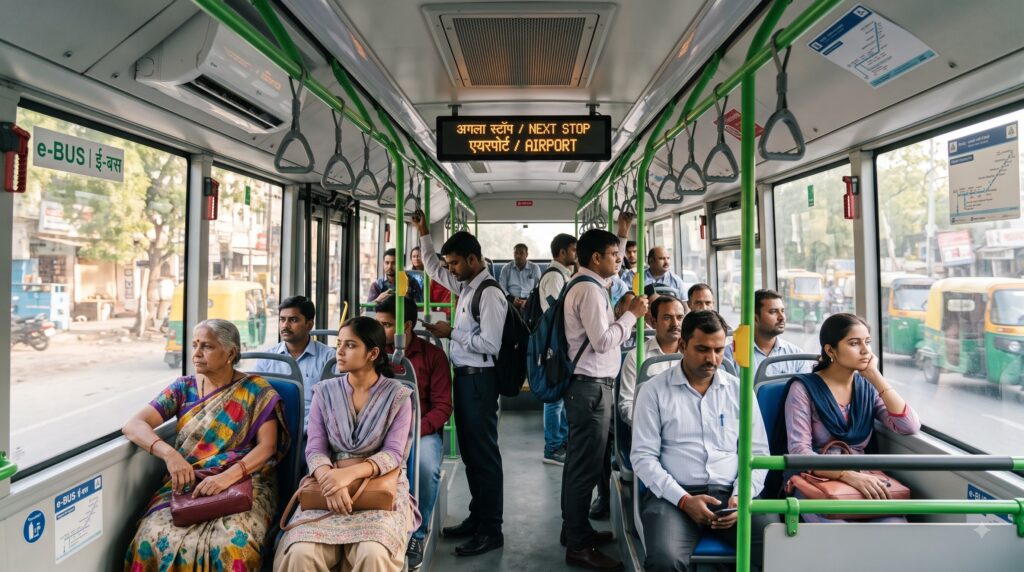
With this vision to encourage growth of urban transport system and also in line with the policy of the Government of India to promote electric mobility along low carbon path, MoHUA launched PM-eBus Sewa Scheme for Tier 2 and Tier 3 cities with the following objectives:
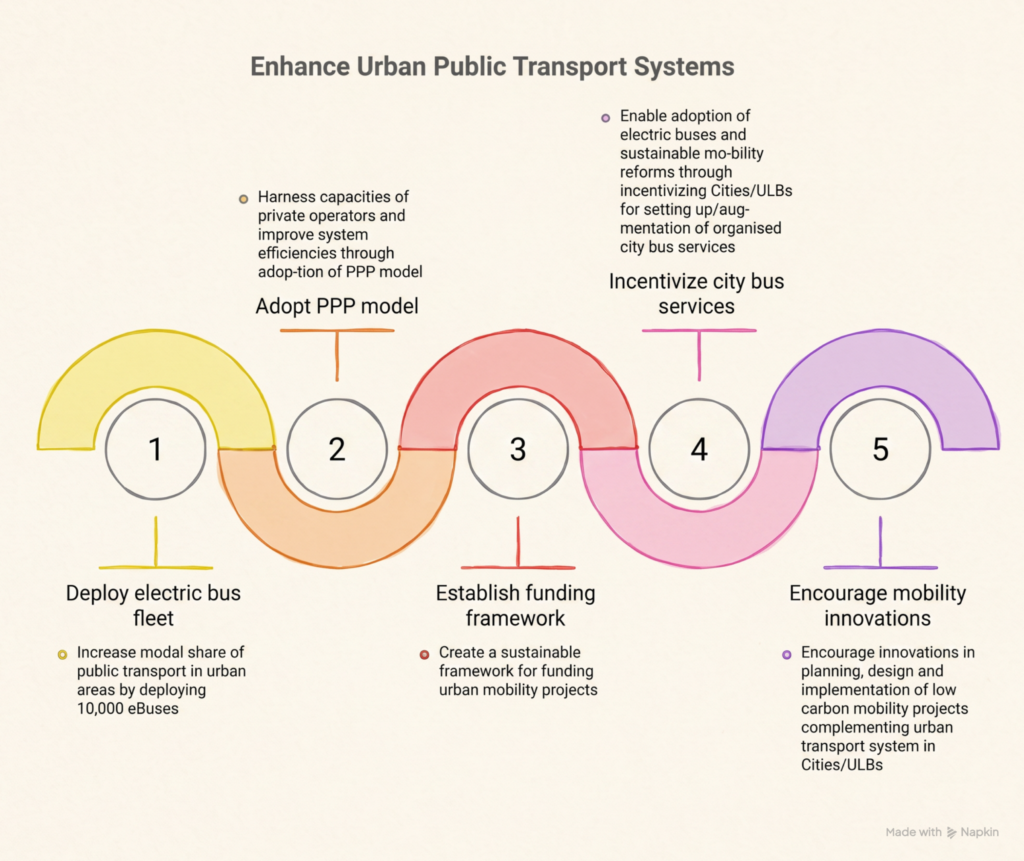
- Increase modal share of public transport in urban areas by deploying 10,000 eBuses;
- Harness capacities of private operators and improve system efficiencies through adoption of PPP model;
- Create a sustainable framework for funding urban mobility projects;
- Enable adoption of electric buses and sustainable mobility reforms through incentivizing Cities/ULBs for setting up/augmentation of organised city bus services; and
- Encourage innovations in planning, design and implementation of low carbon mobility projects complementing urban transport system in Cities/ULBs.